
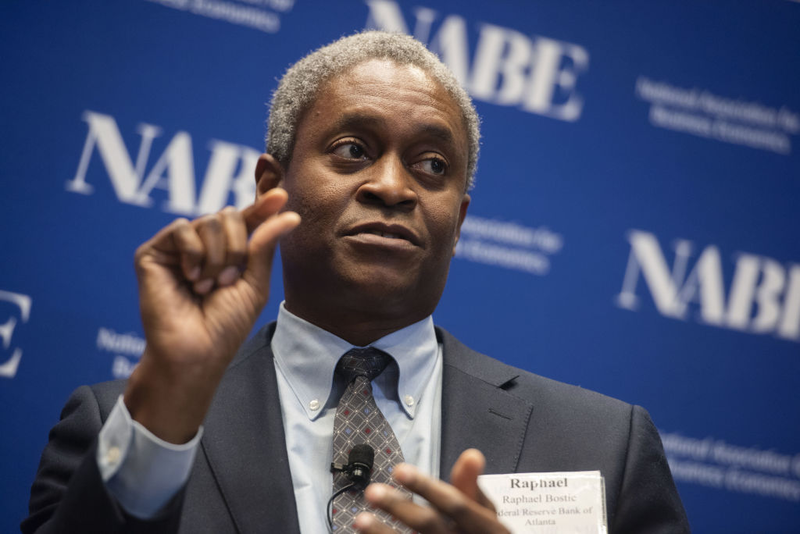
Atlanta Fed Chair Raphael Bostic Cautions Against Rapid Rate Cuts, Warns Of Inflation ‘See-Saw’
The Atlanta Fed chair Raphael Bostic warned that inflation could “see-saw” if rates are cut too quickly. The Financial Times reports that ahead of a December CPI reading, Bostic remarked that he expected “to see much slower progression of inflation moving forward” before warning that there are “some risks that inflation may stall out altogether.” Bostic also ceded that even though price points have fallen faster than he thought, inflation would still be around 2.5% by the end of 2024 and wouldn’t hit the Fed’s goal until 2025.
Bostic told the Financial Times, “Inflation must be firmly and surely getting back to our 2 percent target. It would be a bad outcome if we started to ease and inflation started to rise up and down like a see-saw. That would undermine people’s confidence in where the economy is going.”
Bostic spoke to the predilection of investors to believe that the markets will stabilize faster than he does, saying that the Fed’s projections are and have been clear and consistent. “Markets hear what we are saying — our projections for rate cuts have been pretty clear,” Bostic said. “But it’s my sense that they believe inflation is going to come down faster than I do.”
Bostic also connected the attacks on vessels in the Suez Canal by Houthi rebels to the rising costs of shipping, saying that “It will be very interesting to see to what extent the Middle East conflict and attacks on the container ships is starting to show up in the cost structure for businesses in my district.”
Bostic believes that the labor market is still too strong for the Fed to shift its focus from inflation to job creation, saying, “If we look at our employment mandate, we’re hitting that very firmly today.”
Bostic added, “But that is not the case for price stability. There are signs underneath the hood that some segments of the economy have weakened.”
Bostic also rebuffed an argument from some that the Fed needs to be cautious about any spikes in the market created by debt issued from the United States government, saying, “Today we haven’t really seen any movements in money markets that suggests we’re close to a scenario where we don’t have ample reserves any more.” He continued, “Clearly at some point, there’s going to be a signal that we’re going to get closer to that threshold, and we’re going to have to do some thinking.”
RELATED CONTENT: Trump Says He Hopes Economy Crashes ‘During This Next 12 Months’