
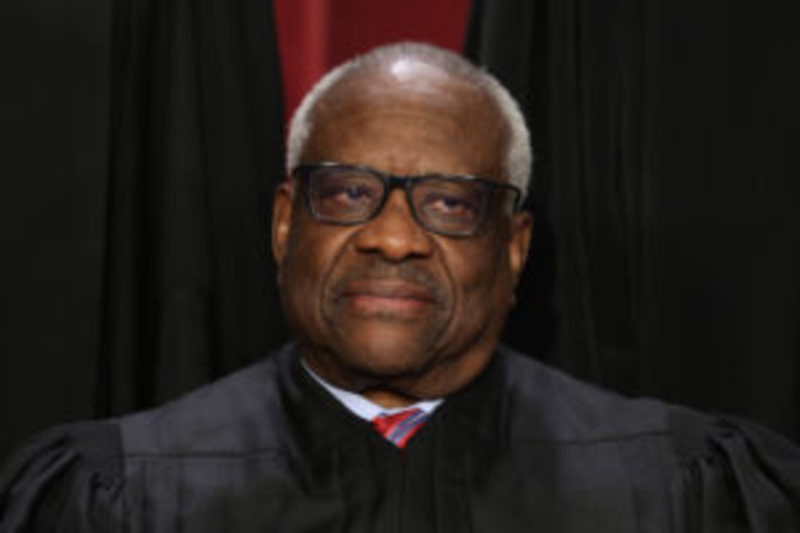
Justice Clarence Thomas Recuses Himself For The First Time Ever
Supreme Court Justice Clarence Thomas made the rare decision to recuse himself from a case related to the House Jan. 6 Committee on Monday. This case marks the first instance of recusal for Justice Thomas in a Capitol riot-related matter, amidst increasing public concern over potential ethical conflicts, according to Forbes.
The case in question involved a former law clerk, John Eastman, who is closely aligned with former President Trump. Eastman had petitioned the Supreme Court to overturn a lower court’s ruling that granted the House committee access to certain emails he argued were protected by attorney-client privilege. However, the high court declined Eastman’s request to review the case without any recorded dissents.
Justice Thomas did not provide an official explanation for his recusal, which aligns with the standard practice among justices. However, one prominent factor in the case is that John Eastman, a central litigant, had previously served as Justice Thomas’s law clerk.
This move comes amid mounting scrutiny directed at Justice Thomas over his involvement in cases related to the Jan. 6 committee, especially given his wife Virginia Thomas’s association with efforts to contest the 2020 election results. Mrs. Thomas’s engagement in activities, including communication with White House Chief of Staff Mark Meadows, occurred concurrently with Supreme Court cases related to these matters.
Most notably, Justice Thomas did not recuse himself from a January 2022 case that pertained to whether documents from the Trump Administration held by the National Archives should be provided to the House Jan. 6 Committee. In that case, he stood alone in dissent as the Court rejected the Trump Administration’s plea to prevent the documents from being handed over.
The justice’s involvement in a case from December 2020, which aimed to challenge election results in several battleground states, further fueled concerns. While the Court ultimately turned down Texas’s request to take up the case, Justices Thomas and Samuel Alito dissented.
Moreover, Justice Thomas has faced controversy over accepting gifts from affluent Republican political donors. He has reportedly received expensive vacations, private jet and yacht rides, and significant private school tuition payments for family members from a wealthy conservative businessman named Harlan Crow, who has made substantial political contributions aimed at influencing the Court.
Thomas has argued that these gifts did not contravene ethical guidelines, as they fell within an exception for personal hospitality from close friends. Nonetheless, experts have contested this interpretation. Recent investigative reporting from ProPublica unveiled that Justice Thomas also accepted at least 38 additional extravagantly costly vacation packages from three other billionaire donors, none of which were disclosed on his mandated financial disclosures. Furthermore, it was revealed in September that Thomas had secretly participated in fundraiser events for the Koch network, a right-wing political organization founded by billionaire brothers Charles and David Koch.
The nexus between Justice Thomas’s legal decisions, his wife’s political involvement and his connections to affluent political donors has raised growing concerns about potential ethical conflicts and their impact on the integrity of the Supreme Court.
RELATED CONTENT: Justice Clarence Thomas Allegedly Involved In Undocumented Koch Network Donor Events